


- By admin
- February 1, 2026
- No Comments
How to Plan a Luxury Home Interior in 2026
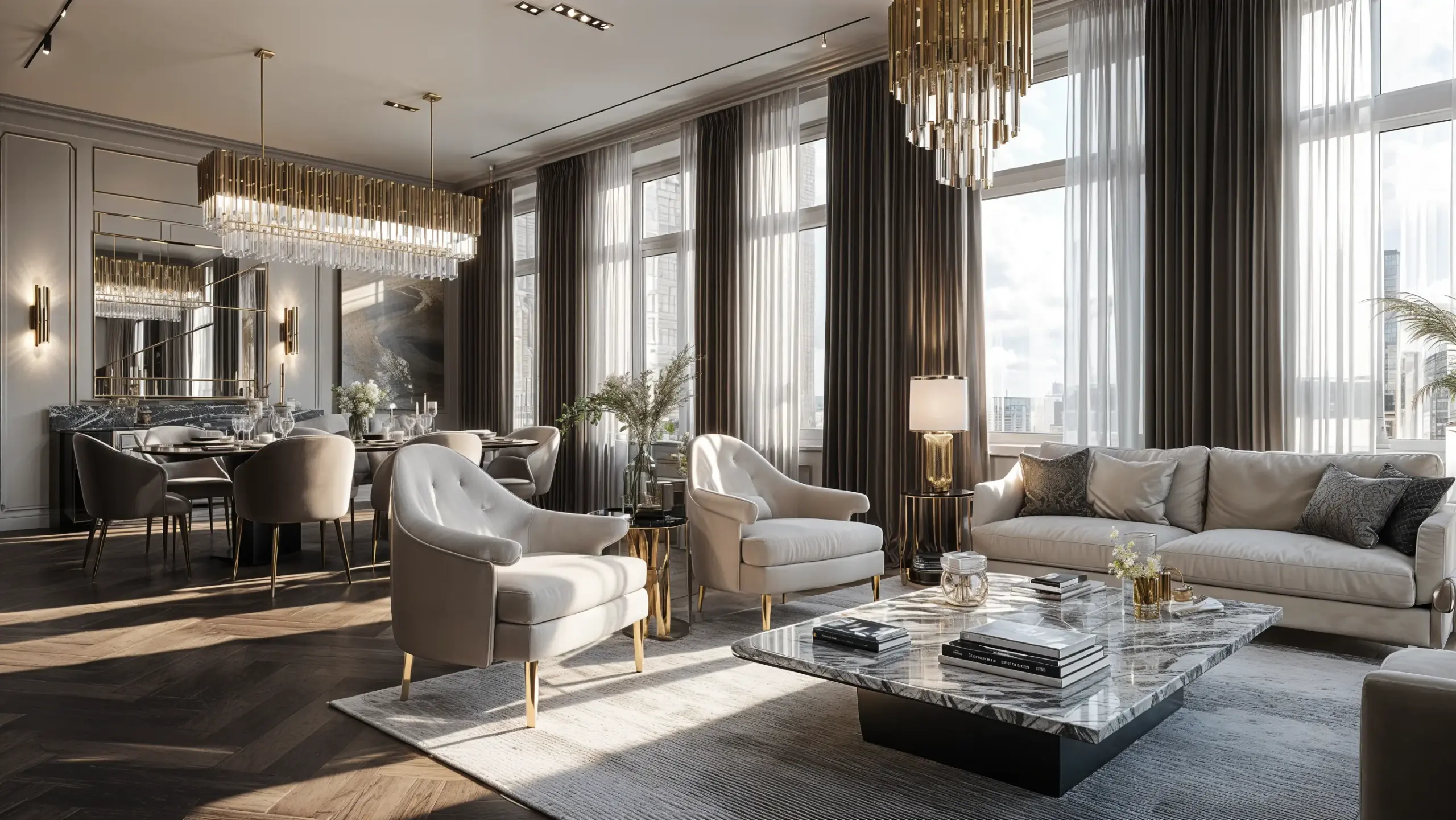
Luxury home interiors in 2026 are no longer about visual extravagance alone. The modern luxury homeowner is more informed, more intentional, and far more selective. Today’s luxury is defined by thoughtful planning, spatial intelligence, material authenticity, and long-term value, not by trend-chasing or excess.
If you are planning a high-end residence—whether a private villa, penthouse, or bespoke apartment—this guide walks you through how designers plan luxury homes in 2026, step by step. From pre-design strategy to material decisions, technology, and execution, this article is written for homeowners who want design clarity before investment.
1. Redefining Luxury in 2026: What Has Changed?
Luxury interiors have undergone a quiet but powerful shift. In 2026, luxury is no longer loud. It is measured, intelligent, and deeply personal.
Key shifts shaping luxury homes today:
From decor-led to design-led planning
From visual trends to timeless material value
From show homes to high-function private sanctuaries
From surface beauty to holistic spatial experience
Affluent homeowners now prioritize:
Layout efficiency and circulation
Sensory comfort (light, acoustics, airflow)
Custom-crafted elements over mass luxury brands
Homes that age beautifully over 15–20 years
Luxury is no longer what you add — it’s what you refuse to compromise on.
2. Start With Spatial Strategy, Not Style
The biggest mistake homeowners make is choosing a style before defining the spatial framework.
In 2026, luxury designers begin with:
How the home is lived in daily
Privacy gradients (public → semi-private → private)
Daylight movement across rooms
Furniture-to-space proportions
Long-term adaptability of spaces
Before any finishes are discussed, a luxury home must answer:
How does this space flow, not just look?
Where does silence matter?
Where does openness enhance living?
Which views are framed intentionally?
A luxury home feels expansive not because it is large, but because it is correctly proportioned.
3. Layout Planning for Modern Luxury Living
Luxury homes in 2026 follow clear zoning logic:
Public Zones
Entrance foyer with visual breathing space
Living and formal entertaining areas
Powder rooms placed discreetly
Semi-Private Zones
Family lounges
Informal dining
Reading or media spaces
Private Zones
Bedrooms with acoustic separation
Walk-in wardrobes as transition spaces
Spa-like bathrooms with daylight access
Smart luxury layouts:
Avoid excessive open plans
Use subtle partitions, level changes, and material shifts
Create visual continuity without noise
A well-planned luxury home feels calm even during social gatherings.
4. Material Intelligence: The New Marker of Wealth
In 2026, materials signal sophistication more than brands.
Luxury designers prioritize:
Natural stone with minimal processing
Solid wood and engineered veneers
Hand-finished metal accents
Textured plasters and microcement
Natural fabrics with tactile depth
What’s changing:
Glossy finishes are being replaced by soft matte
Book-matched stone is used selectively, not everywhere
Warm metals replace high-shine chrome
Materials are layered quietly, not contrasted aggressively
True luxury lies in how materials age, not how they photograph on day one.
5. Bespoke Over Branded: Custom is the New Status
Affluent homeowners in 2026 are moving away from catalog interiors.
Instead, luxury homes feature:
Custom-designed furniture proportions
Made-to-measure wardrobes and storage
Integrated lighting details
One-of-a-kind joinery elements
Why bespoke matters:
Perfect fit to your architecture
Superior material control
No repetition across homes
Higher long-term value
A luxury home should feel impossible to replicate.
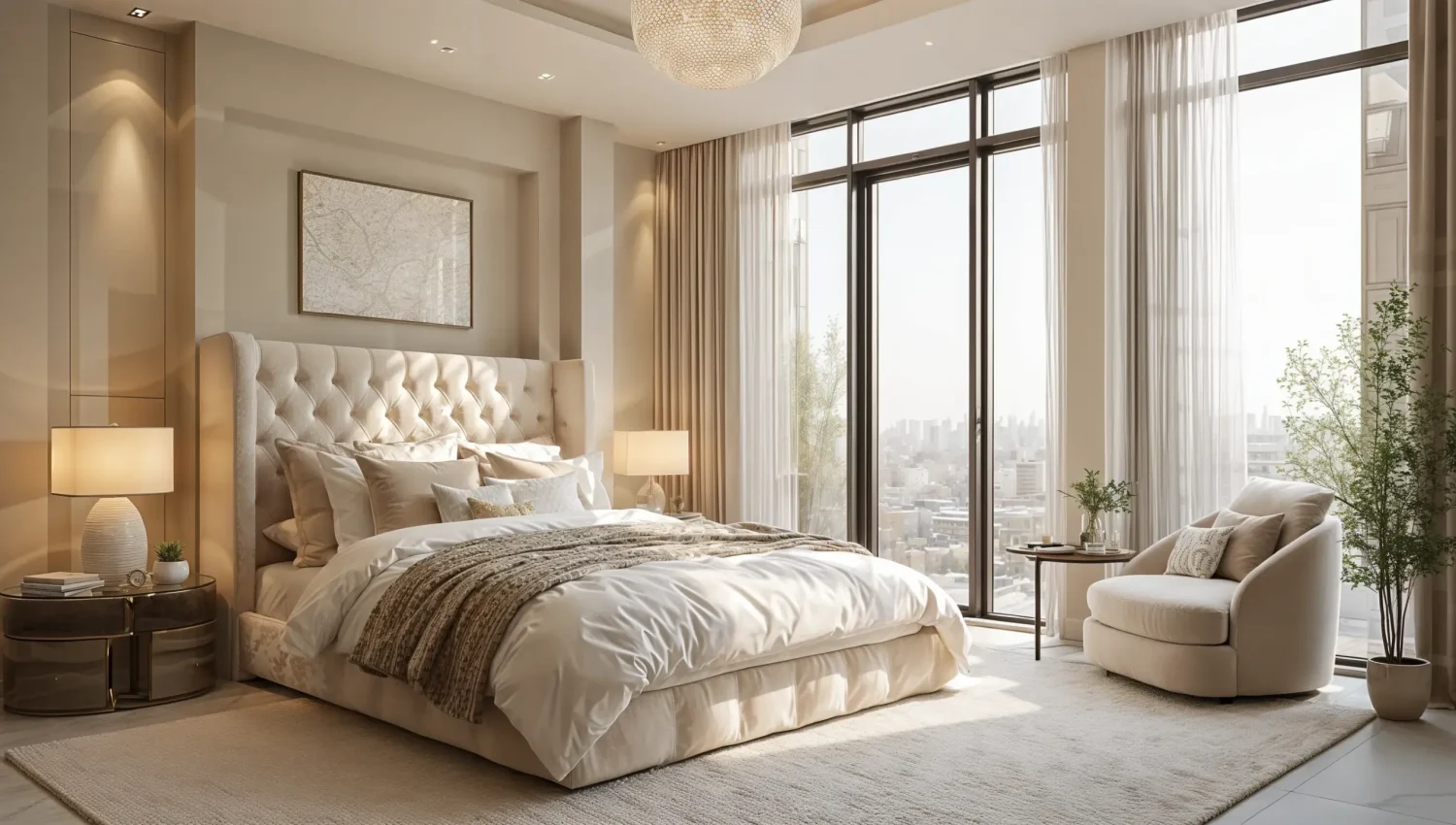
6. Lighting Design: The Silent Luxury Layer
Lighting is no longer decorative—it is architectural.
In luxury homes:
Ambient lighting defines mood
Accent lighting reveals textures
Task lighting is invisible but precise
2026 lighting principles:
Warm, layered light temperatures
No harsh ceiling grids
Concealed light sources
Minimal visible fixtures
Good lighting doesn’t draw attention—it creates atmosphere.
7. Kitchens & Bathrooms: Where Luxury Is Felt Daily
Luxury planning focuses heavily on daily-use spaces.
Luxury Kitchens in 2026
Concealed appliances
Stone or engineered surfaces with depth
Seamless storage
Integrated lighting under shelves and counters
Luxury Bathrooms
Spa-inspired layouts
Walk-in showers with minimal hardware
Natural textures over shine
Warm lighting and ventilation planning
Luxury is felt most in the spaces you use every day, not just the living room.
8. Technology That Disappears Into Design
High-end homes in 2026 integrate technology without visual clutter.
Smart luxury includes:
Automated lighting and climate
Integrated audio systems
Motorized window treatments
Security systems built into architecture
The rule is simple:
If technology is visible, it’s not luxury.
9. Sustainability Without Compromise
Luxury homeowners now expect responsibility without sacrifice.
Modern luxury interiors:
Use long-life materials
Reduce unnecessary replacement
Prioritize energy efficiency
Design for longevity over trends
Sustainable luxury is quiet, intelligent, and future-proof.
10. Execution: Where Luxury Is Won or Lost
Even the best design fails without precision execution.
Luxury execution demands:
Detailed drawings
Clear material specifications
Skilled craftsmanship
Continuous site supervision
This is why luxury homeowners increasingly choose end-to-end design partners rather than fragmented vendors.
11. Why Designer-Led Planning Saves Money Long-Term
Contrary to belief, luxury design is not about overspending.
A professionally planned luxury home:
Avoids redesign costs
Prevents material wastage
Reduces maintenance issues
Enhances resale value
Luxury is not expensive when planned well.
Mistakes are.
12. Choosing the Right Luxury Interior Design Partner
Before finalizing a design firm, ask:
Do they lead with planning or styling?
Do they customize or replicate?
Do they manage execution end-to-end?
Do they understand long-term value?
A luxury interior is a collaboration built on trust, clarity, and expertise.
Final Thoughts: Luxury Is a Thoughtful Process
Luxury home interiors in 2026 are not built in haste. They are designed deliberately, layered carefully, and executed precisely.
The most successful luxury homes are not the most expensive—they are the most intentional.
If you are planning a luxury residence, start with design intelligence, not decoration. The result will always speak for itself.